
That first moment after you lock up should feel intentional - close, controlled, and surprisingly comfortable. If it feels like pinching, cold pressure, numbness, or constant distraction, the issue is rarely “you.” It is almost always sizing.
A chastity cage is a precision fit item. The right size creates a sleek, secure wear that can fade into the background until you decide it should matter. The wrong size turns even the most refined power dynamic into a fussy, high-maintenance experience.
Chastity cage sizing guide: the three numbers that matter
Most shopping mistakes happen because people chase only one measurement, usually length. In reality, a good fit is a balance between three variables: base ring size, cage internal diameter, and cage length. Get two right and one wrong, and you will still feel it - in comfort, security, or both.
Base ring size is the foundation. It sets how the device anchors behind the shaft and scrotum. Cage internal diameter controls how much “room” you have inside the tube. Cage length controls how much forward space is available.
If you want a clean, design-forward fit that is wearable for hours, prioritize the base ring first, then diameter, then length.
Measure base ring size (and why it is not optional)
The base ring should sit behind the testicles, at the base of the penis. It needs to be snug enough to prevent escape and reduce shifting, but not so tight that it compresses nerves or restricts circulation.
The most reliable approach is to measure circumference, then convert to diameter. Use a soft measuring tape if you have one. If not, use a strip of paper or string and a ruler.
Measure while soft, standing, with the scrotum relaxed. Wrap the tape around the penis and behind the testicles where the ring will sit. You want a natural fit - not pulled tight like a tourniquet, and not loose like jewelry.
Now divide that circumference by 3.14 to estimate diameter. That diameter is your starting base ring size.
To make that easier, here is a quick-reference conversion from the circumference you just measured to your approximate base ring diameter. Find your measured circumference, and the matching diameter is your starting ring size.
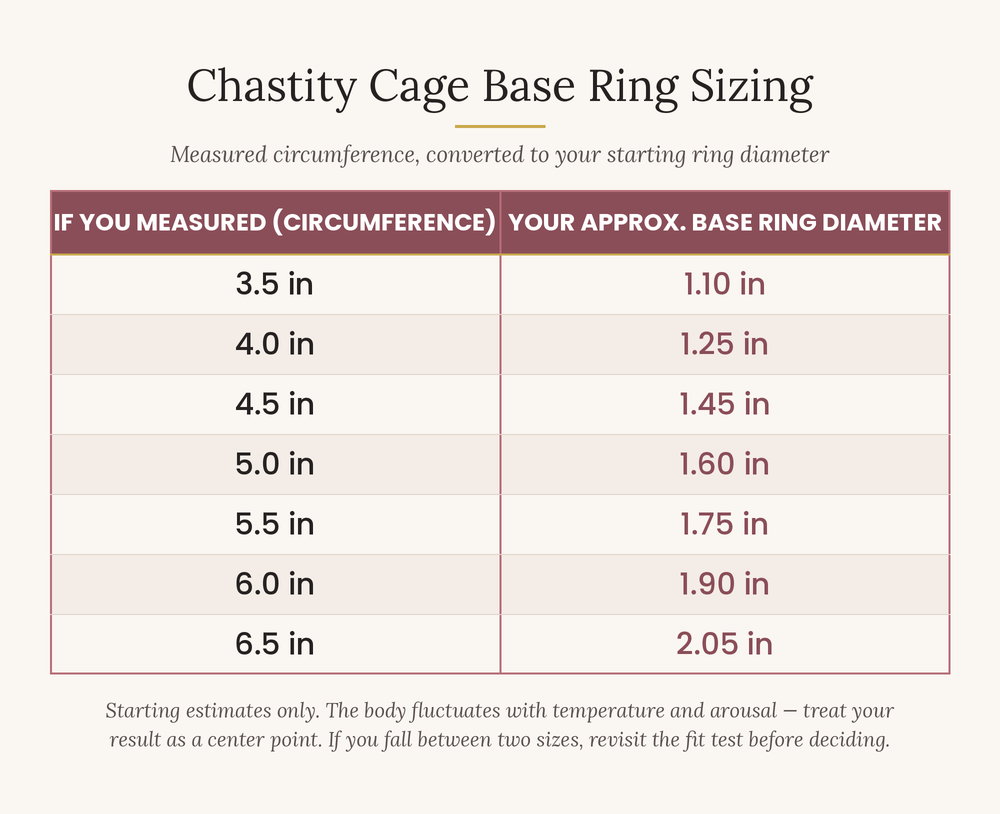
These are starting estimates. Because the body fluctuates with temperature and arousal, treat your result as a center point rather than an exact answer — if you fall between two sizes, revisit the "fit test" section below before deciding.
Here is the nuance: scrotums fluctuate with temperature, stress, and arousal. If you measure right after a hot shower, you may size up. If you measure in a cold room, you may size down. For most people, taking two measurements at different times and choosing the middle gets you closer to an everyday fit.
Signs your ring is too small: tingling, numbness, discoloration, or a sharp “edge” feeling within minutes. Signs it is too large: the device rotates freely, pulls uncomfortably, or you can slip out with minimal effort.
Choose cage diameter for comfort, not ego
Cage internal diameter is the most overlooked comfort factor. Think of it as how “hugging” the cage feels.
A smaller diameter reduces movement and can heighten the sense of containment. But if it is too narrow, skin can press into openings, creating pinch points and swelling. A larger diameter is easier to put on and can feel more forgiving, but it can also allow too much shifting, especially during sleep.
A practical way to estimate: measure your soft girth at mid-shaft (circumference), divide by 3.14 for diameter, then subtract a small amount for a close fit. “Small amount” depends on material. Rigid materials (metal, hard plastic, resin) tolerate less reduction because there is no give. Softer silicone can accommodate a slightly tighter hug.
If you are choosing a cage with wide ventilation gaps or a design with prominent openings, err slightly larger. Pinching is more likely when the cage is narrow and the openings are aggressive.
Choose length based on function and wear time
Length is where the fantasy meets real life. Short cages are popular because they minimize erection room, reduce leverage, and often look more discreet under clothing. Longer cages can feel more spacious and may be easier for beginners, but they can also shift more and create friction at the tip.
To estimate length, measure your flaccid length from the base (where the shaft meets the body) to the tip. Then subtract about 1/4 to 1/2 inch for a controlled fit. If you subtract too much, you can create constant pressure on the glans and urethral opening, which can be irritating over long wear.
If you are planning extended wear, prioritize “no hot spots” over maximum restriction. The most elegant dynamic is the one you can actually live in.
The fit test: what “right” feels like
A correct fit does not feel like constant compression. It feels like secure presence.
In the first 10 minutes after fitting, you should be able to walk normally, sit without a sharp edge digging in, and feel normal warmth and color. Mild awareness is expected. Pain is not.
Over the next hour, pay attention to three areas: the underside of the ring, the sides of the scrotum where it meets the ring, and any openings along the cage. If you feel repeated pinching in the same spot, it is usually a diameter or ring issue, not a “break-in” issue.
At night, you are testing a different scenario: involuntary arousal. If you wake up from discomfort, that points to too-short length, too-narrow diameter, or a ring that is too tight for swelling changes.
It depends: matching size to your intention
Sizing is not one-size-fits-all because the purpose is not one-purpose-fits-all.
If your intention is discreet daily wear, you will typically prefer a closer diameter and a shorter length to reduce shifting. If your intention is occasional scenes, you might choose a slightly looser, more dramatic silhouette that looks incredible and feels symbolic, even if it is not your 12-hour option.
If you are new, the smartest “beginner” choice is not necessarily bigger. It is forgiving. That usually means smoother edges, simpler geometry, and sizing that is close enough to feel secure without being aggressive.
Materials and sizing: how the build changes the math
A design-led cage in polished metal can feel exquisite, but it behaves differently than silicone.
Metal and rigid plastics hold their shape. That means your measurements need to be more accurate, because the device will not flex around swelling or movement. The advantage is stability and a clean, premium feel.
Silicone offers a touch of forgiveness and can reduce the risk of pressure points for some bodies. The trade-off is that it may allow more movement, and if the base ring is also flexible, some people find it easier to escape.
Ventilation and hygiene features matter too. A cage with thoughtful airflow can be more comfortable in warm weather and easier to maintain, but larger openings can increase the chance of skin pressing outward if diameter is too tight.
Common sizing mistakes (and how to avoid them)
Most sizing issues follow a pattern.
The first is buying too small to “make it work.” That tends to create swelling, pinching, and quick abandonment. Control is refined when it is sustainable.
The second is oversizing the base ring because putting it on feels intimidating. A slightly larger ring may feel easier in the moment, but it often leads to rotation, tugging, and long-term discomfort.
The third is chasing length reduction without considering diameter. If the cage is short but wide, you may still get uncomfortable movement. If it is narrow but long, you may get pinch points and friction.
The fourth is ignoring your day-to-day body changes. If you work out, sit for long periods, live in a hot climate, or deal with frequent temperature shifts, you may need a slightly different fit than someone who is mostly stationary and cool.
A calm, precise measuring routine at home
Treat measuring like a fitting appointment, not a rushed pre-checkout task.
Start soft, relaxed, and unhurried. Take measurements twice - once in a neutral environment and once at a different time of day. Write down circumference for the base ring area, your soft shaft circumference, and your soft length.
If you are between sizes, decide based on your priority. If security matters most, you might size down carefully on the ring, but only if circulation stays healthy. If comfort and wear time matter most, you might size up slightly on diameter.
If you are building a wardrobe of devices for different moods, it is normal to own more than one size profile. Think of it like lingerie: your “everyday” and your “statement piece” do not have to be the same.
Shopping with confidence
When you are ready to choose, look for product descriptions that clearly list ring sizes, cage length, and internal diameter. The more transparent the specs, the more premium the buying experience tends to feel.
You'll find that level of detail across our chastity cage collection — each piece is listed with the measurements that matter, in inches, so you can shop directly against the numbers you just took. If you're choosing your first device, filter toward smoother edges and simpler geometry rather than the most aggressive fit; a forgiving design is far easier to live in while you learn what suits you.
Closing thought
When your measurements are ready, explore the full chastity collection here and choose the fit that matches your numbers
The best-fitting cage is the one that disappears when you want normal life - and becomes unmistakably present when you decide the moment deserves it.