
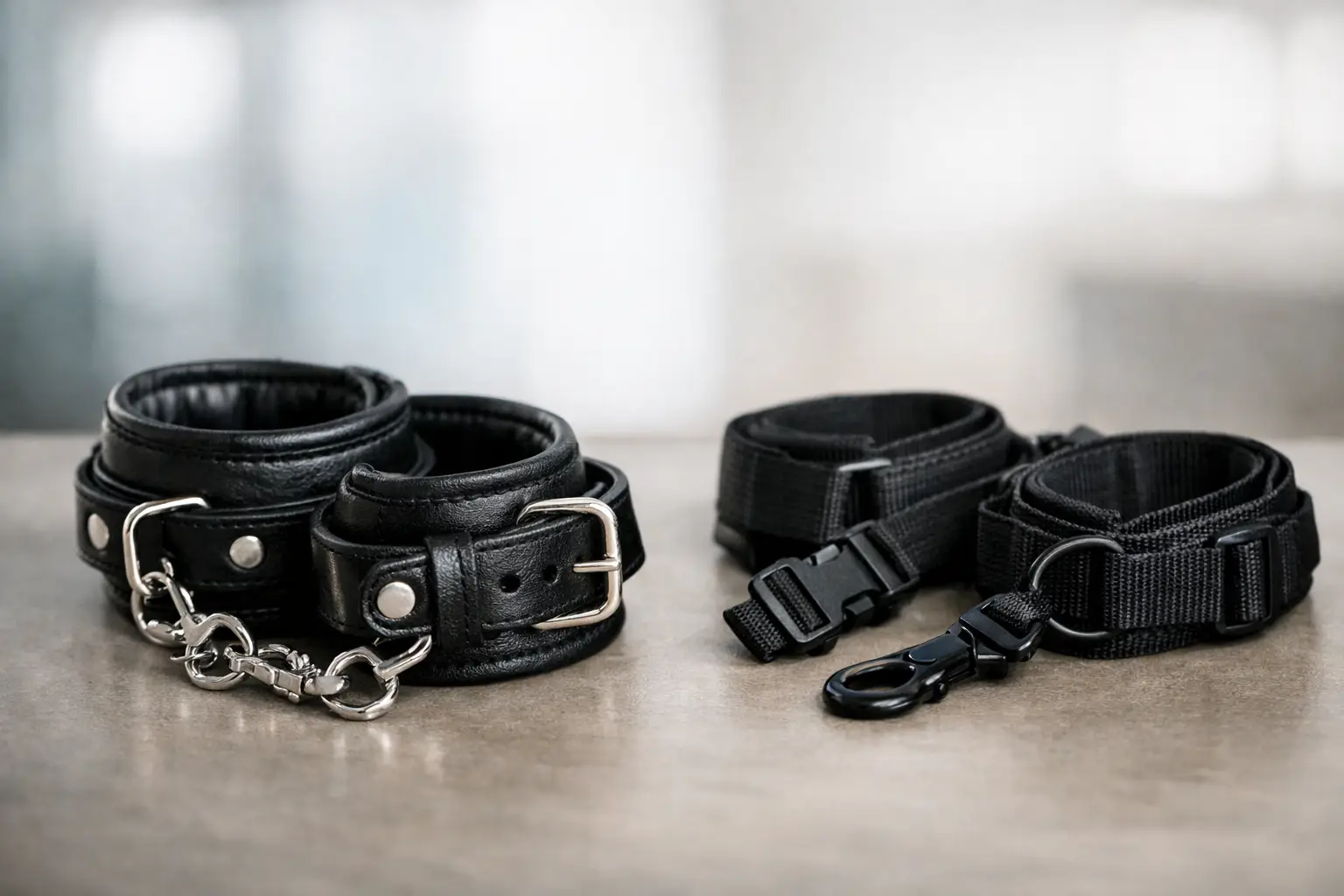
The first thing you notice about a restraint is not the buckle or the closure. It is the feeling on your skin. That is why the choice between silicone cuffs vs leather restraints matters more than many people expect. Material changes the mood, the level of structure, the ease of use, and even how likely you are to reach for a set again.
For some, silicone feels sleek, modern, and approachable - a clean entry into playful control. For others, leather delivers the weight, ritual, and visual authority that make restraint play feel fully realized. Neither is automatically better. The right pick depends on how you want the experience to feel, how often you plan to use it, and how much importance you place on maintenance, aesthetics, and intensity.
Silicone cuffs vs leather restraints: what really changes?
At a glance, cuffs and restraints can seem interchangeable. In practice, material shapes almost everything. Silicone tends to feel smooth, flexible, and less intimidating on first contact. Leather often feels more substantial, more structured, and more connected to classic bondage styling.
That difference affects the entire arc of a scene. Silicone usually creates a more contemporary, design-led experience. It can feel polished and minimal, especially for couples who want intimacy gear that feels elevated rather than theatrical. Leather, by contrast, often brings stronger visual symbolism. It signals intention. It can make a simple wrist restraint feel more ceremonial, more grounded in power exchange, and more intense before anything even begins.
This is why shopping by material is smart. You are not just choosing what goes around the wrists or ankles. You are choosing the texture of the experience.
Comfort and wearability
If comfort is the deciding factor, silicone often has the advantage for many beginners and casual users. Good silicone cuffs are soft against the skin, typically more forgiving during movement, and less likely to feel abrasive during shorter sessions. They can be ideal for exploratory play where the goal is teasing, sensory contrast, or light restraint without the emotional weight of heavier bondage gear.
Leather can absolutely be comfortable, but comfort depends more on craftsmanship. High-quality leather restraints with smooth edging, soft lining, and secure hardware can feel luxurious and supportive. Poorly finished leather, on the other hand, can feel stiff or rub at pressure points. With leather, quality matters fast.
There is also the question of break-in. Silicone generally feels the same from the start. Leather often improves with use, softening over time and conforming more naturally to the body. For people who value that lived-in, personal feel, leather offers something silicone cannot quite replicate.
Control, structure, and how secure it feels
When people compare silicone cuffs vs leather restraints, what they are often really asking is which feels more secure. In many cases, leather has the edge in perceived control. It tends to hold its shape better, especially in styles with buckles, reinforced straps, and metal hardware. That can create a more stable, deliberate restraint experience.
Silicone is usually more flexible. That can be a benefit or a drawback depending on your style of play. For lighter control dynamics, flexibility can feel less intimidating and more body-friendly. For those who want a firmer sense of restraint, silicone may feel less serious unless it is paired with strong hardware and thoughtful construction.
This is not just about strength. It is about psychology. Leather often communicates authority through its visual and tactile presence. Silicone feels cleaner and more understated. If the dynamic relies on anticipation, command, or a more traditional bondage aesthetic, leather often lands more strongly.
Cleanup and maintenance
This is where silicone becomes especially appealing. It is generally easier to clean, less absorbent, and well suited to people who want intimacy products that fit neatly into a modern routine. For shoppers who value discretion, convenience, and low-maintenance luxury, silicone can feel refreshingly practical.
Leather asks for more care. It should be kept dry when possible, cleaned according to its finish, and stored thoughtfully to protect the material. For some buyers, that extra upkeep feels worth it because leather ages beautifully and carries a premium, lasting quality. For others, maintenance becomes a quiet reason the restraints stay in the drawer.
If you want gear that feels effortless to incorporate into regular play, silicone often wins. If you enjoy objects that reward ownership and attention, leather has its own appeal.
Style and atmosphere
Restraints are functional, but they are also visual. They help create the atmosphere of a scene, and style matters more than people sometimes admit.
Silicone cuffs tend to align with a sleek, contemporary aesthetic. They can feel minimalist, polished, and a little more discreet in tone. That makes them appealing for buyers who want bondage gear that feels design-forward rather than overtly fetish-coded. In a curated bedroom environment, silicone often blends in more naturally with a refined, modern sensibility.
Leather restraints make a stronger statement. They carry heritage and presence. Even a simple pair of leather cuffs can change the emotional temperature of the room. For couples who want bondage to feel cinematic, ritualistic, or deeply rooted in control dynamics, leather often creates a richer atmosphere.
This is one of those it depends moments. If you want restraint play to feel elegant and approachable, silicone may be the better match. If you want it to feel iconic and charged, leather tends to deliver more drama.
Best choice for beginners
For many first-time buyers, silicone is the easier starting point. It is often less intimidating visually, gentler in feel, and simpler to maintain. That lowers friction in every sense. It can help couples focus on communication, sensation, and trust without feeling like they have committed to an aesthetic or level of intensity they are not yet sure about.
That said, some beginners are drawn to leather precisely because it feels more intentional. If the fantasy matters, and if a softer, more fashion-forward leather set feels aligned with your dynamic, leather does not have to be advanced. The key is choosing well-made restraints with comfortable interiors, easy-release options, and a fit that allows for safe, controlled use.
Beginners do best when the product matches both their curiosity and their confidence. A material that feels inviting is usually the one that gets used.
Best choice for experienced users
Experienced users often choose based on scene goals rather than broad preference. Silicone can still play a role in more advanced settings, particularly when cleanliness, versatility, or body-safe ease is a priority. It works well for playful control, travel-friendly kits, and scenarios where comfort over longer wear matters.
Leather tends to appeal to experienced users who care about ritual, structure, and visual impact. It often feels more aligned with layered restraint setups, stronger power dynamics, and a more immersive bondage aesthetic. The tactile experience of fastening leather, adjusting buckles, and hearing metal hardware connect is part of the appeal.
For seasoned buyers, this is less about beginner versus advanced and more about intentional curation. Different materials support different moods.
How to decide between silicone cuffs vs leather restraints
A simple way to choose is to think beyond the product page. Picture the actual experience. Do you want restraint play to feel sleek, low-pressure, and easy to revisit? Silicone probably fits better. Do you want it to feel weightier, more symbolic, and more visually commanding? Leather is likely the stronger choice.
Also think about your habits. If you value quick cleanup and uncomplicated storage, silicone supports that. If you appreciate craftsmanship and do not mind caring for materials properly, leather can feel like a premium investment. If comfort is your top priority, compare interior finish and flexibility. If atmosphere is your top priority, compare how each material supports your preferred dynamic.
At XtasyXperience, that is the real lens for shopping well - not just what a restraint is made from, but what kind of connection it helps create.
There is no universally better material here, only a better match for your intention. The most satisfying restraint is the one that feels right on the body, right in the moment, and right for the kind of intimacy you want to build next.