
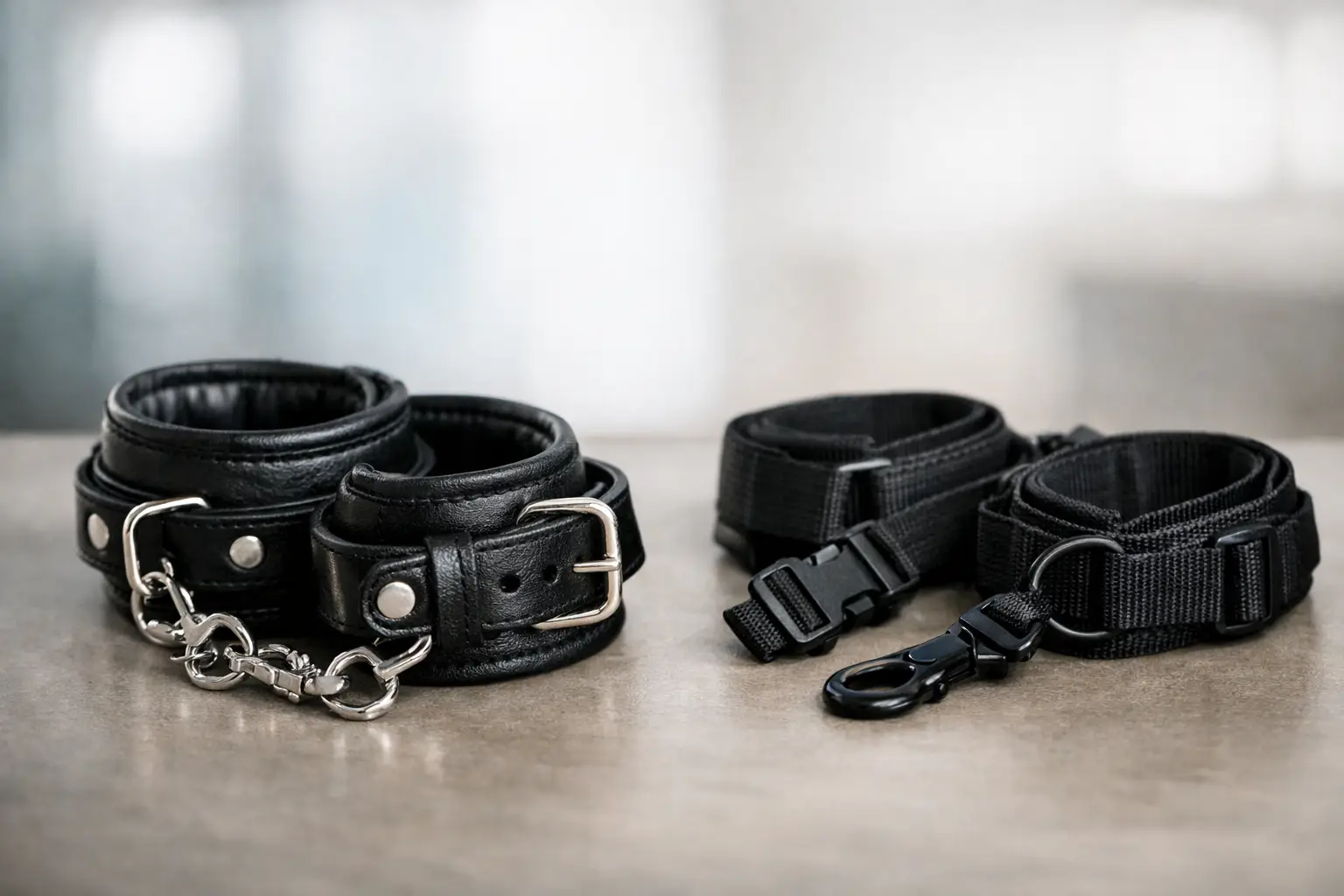
The mood can be perfect, the trust can be there, and the intention can be clear - but the wrong restraint still changes the entire experience. In bondage play, material matters more than most people expect. It shapes comfort, control, pacing, and even the emotional tone of the scene.
That is why the question of leather cuffs vs nylon restraints is less about which one is "better" and more about which one fits the kind of experience you want to create. One leans structured, sensual, and design-forward. The other tends to be practical, lightweight, and easy to use. Both can absolutely have a place in a refined play wardrobe.
Leather cuffs vs nylon restraints: what actually changes?
At a glance, both options do the same job. They limit movement, support power exchange, and add a physical layer to control dynamics. But once they are on the body, the differences become obvious.
Leather cuffs usually feel more substantial. They tend to be heavier, more tactile, and more visually intentional. That weight can make a scene feel more grounded and immersive, especially for couples who want restraint to feel like part of the ritual rather than a quick accessory. A well-made leather cuff often delivers a sense of permanence and polish that many luxury-minded shoppers are drawn to.
Nylon restraints are typically lighter and more flexible. They often appeal to beginners because they feel approachable and uncomplicated. They are easier to pack away, easier to keep on hand, and often easier to adjust on the fly. If your priority is versatility or convenience, nylon can feel refreshingly straightforward.
So the real shift is not just material. It is atmosphere. Leather often reads as deliberate and elevated. Nylon often reads as accessible and efficient.
If comfort is the priority, it depends on the design
People often assume nylon is automatically more comfortable because it is softer or lighter. That is not always true. Comfort comes down to width, lining, closures, pressure distribution, and how the restraint is used.
A wide leather cuff with smooth finishing and a soft interior can feel exceptionally secure and comfortable during wear. Because leather tends to hold its shape, it may reduce twisting and bunching, which can make a big difference over time. That structure can feel reassuring, especially in wrist or ankle restraints where stability matters.
Nylon can be gentle, but it can also dig, shift, or create friction if the strap is narrow or if the fit is uneven. In some designs, the flexibility that makes nylon convenient can also make it less stable. For shorter scenes or lighter restraint, that may not matter much. For longer sessions, it often does.
This is where intention matters. If you want a restraint that feels like a considered part of the body, leather tends to excel. If you want something light for occasional use, nylon may be more than enough.
Control, security, and how each material behaves
Security is about more than how tight a restraint can get. It is about how predictable it feels during movement.
Leather usually offers a more anchored sensation. It has less stretch, more structure, and a firmer feel against the skin. For couples exploring stronger control dynamics, that can create a more confident experience. The restraint feels present. It communicates containment in a way that is both physical and psychological.
Nylon restraints can still be effective, but they often feel less substantial. Depending on the design, they may shift more or feel more gear-like than sensual. For some people, that is exactly the appeal. Nylon can feel uncomplicated and functional, which suits playful experimentation or travel-friendly use.
If your play style is more aesthetic, ritualistic, or power-focused, leather usually delivers more of the emotional texture people are looking for. If your play style is casual, exploratory, or highly adaptable, nylon often makes sense.
Leather cuffs vs nylon restraints for beginners
Beginners are often steered toward nylon because it seems less intimidating. There is logic in that. Nylon restraints are usually lightweight, simple to understand, and less of an investment. They can be a low-pressure entry point for couples who are still learning what kind of restraint feels exciting.
But beginner-friendly does not always mean basic. Many first-time buyers actually feel more confident with leather cuffs because they look intentional and easy to read. Buckle closures, wide silhouettes, and structured construction can feel intuitive. There is less ambiguity about where the cuff sits and how it should fit.
What matters most is not experience level but mindset. If you want to test the waters with something affordable and adaptable, nylon may be the right first step. If you are already drawn to elevated materials and want your first restraint purchase to feel curated rather than temporary, leather is often the more satisfying choice.
Aesthetics matter more than people admit
Restraints are functional, but they are also visual. For many shoppers, especially those investing in intimacy as a lifestyle category, the look and feel of the product are part of the pleasure.
Leather cuffs have a clear advantage here. They photograph beautifully, age with character, and often pair naturally with blindfolds, collars, harnesses, and other design-led bondage pieces. They can feel sleek, dominant, classic, or quietly luxurious depending on finish and hardware. They do not just serve the scene. They help define it.
Nylon restraints tend to be less expressive. That does not mean unattractive, but they rarely carry the same sense of refinement. They usually prioritize utility over mood. For some buyers, that is ideal. For others, it can make the experience feel more functional than immersive.
If visual language is part of your turn-on, leather is hard to beat.
Maintenance, longevity, and real-life use
This is where nylon often earns its place. It is generally easier to store, easier to clean casually, and less demanding overall. If you want something low-maintenance that you can use, tuck away, and revisit without much thought, nylon is appealing.
Leather asks for more care, but it often rewards that care with longevity and a more premium feel over time. A quality leather cuff can become softer and more comfortable with use while still retaining structure. It tends to feel less disposable and more like a lasting part of your collection.
For shoppers who value intentional purchases, that distinction matters. Nylon often works well as a practical option. Leather often feels like an investment piece.
Neither is wrong. It depends on whether you want convenience or permanence to lead the decision.
When nylon restraints make the most sense
Nylon is often the better fit when flexibility is the goal. If you want an easy addition to a broader kit, something compact for travel, or a restraint option that feels low-pressure for newer dynamics, nylon can be the smarter buy.
It also suits people who are still figuring out their preferences. Maybe you are not sure whether you like wrist restraint, ankle restraint, under-bed systems, or adjustable connectors. In that phase, nylon can offer experimentation without asking for a highly styled commitment.
There is also something appealing about how approachable it feels. Not every scene needs to feel ceremonial. Sometimes simplicity is exactly the right energy.
When leather cuffs are worth it
Leather cuffs stand out when the experience itself matters as much as the restraint. If you want your gear to feel sensual before it is even worn, leather delivers. If you care about finish, weight, hardware, and how a product contributes to atmosphere, leather makes a strong case.
It is especially compelling for those building a more curated bondage collection. A beautiful pair of cuffs can become a repeat favorite because it feels better, looks better, and supports a more intentional dynamic. That sense of refinement is part of the pleasure.
For shoppers browsing a luxury-led destination like XtasyXperience, that difference is often the deciding factor. Leather does not just restrain. It elevates.
Choosing the right restraint for your dynamic
The best choice comes down to how you want the moment to feel. If you want lightweight versatility, easy storage, and a practical starting point, nylon restraints are a smart option. If you want richer sensory presence, stronger visual impact, and a restraint that feels deeply considered, leather cuffs are usually the more compelling choice.
There is also room for both. Many experienced buyers keep nylon for convenience and leather for scenes where mood, control, and presentation matter more. That is often the most honest answer - not either-or, but right tool for the right intention.
The most satisfying restraint is the one that matches your pace, your aesthetic, and your trust. Start there, and the material tends to choose itself.