
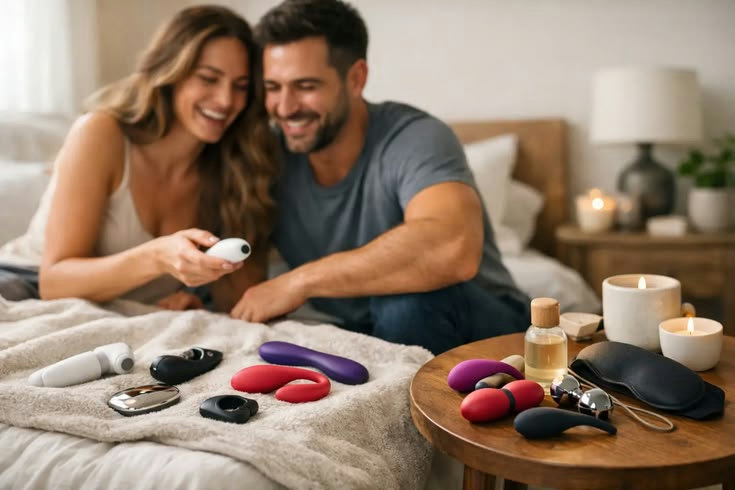
Can couples share the same vibrator safely?
A shared toy can feel intimate in the best way - playful, trusting, and surprisingly connective. It can also raise a very practical question fast: can couples share the same vibrator without creating hygiene risks or discomfort?
The short answer is yes, couples can share the same vibrator. But the better answer is that it depends on how you share it, what the toy is made from, where on the body it is used, and how intentional you are about cleaning and boundaries. Shared pleasure works best when it feels refined, not rushed.
For couples who see intimacy as something curated rather than improvised, this is less about rules for the sake of rules and more about protecting the experience. The right habits keep things feeling confident, comfortable, and easy.
When sharing a vibrator makes sense
Many couples use one vibrator together because it creates a more connected experience. A wand can add clitoral stimulation during partnered sex. A couples vibrator can be designed to stimulate both partners at once. A slim vibrator can shift between external teasing and more focused use as the moment evolves.
Sharing can also be practical. Not every couple wants a separate toy for every purpose, especially when a high-quality vibrator already fits the experience they want. If the toy is well made, easy to clean, and used thoughtfully, sharing can be a natural part of partnered play.
That said, "we're a couple" is not the same as "there's no risk." Being sexually exclusive does not automatically remove concerns around bacteria, yeast, BV, irritation, or STI transmission. The details matter.
Can couples share the same vibrator between partners and body areas?
This is where nuance matters most. Sharing a vibrator externally, such as on the vulva, penis, nipples, or other erogenous zones, is lower risk than sharing it internally. Once a toy is used vaginally or anally, the standard changes.
A vibrator should never move from anal use to vaginal use without being thoroughly cleaned first. Even then, many couples prefer to add a condom over the toy or dedicate separate toys for each area. That is the more polished, lower-stress choice.
Internal sharing between partners also deserves extra care. If a toy is used inside one partner and then inside another, a condom change or a full clean before switching is the safer move. This matters even more if either partner is prone to irritation, recurrent infections, or if STI status is unknown or not mutually exclusive.
In other words, yes, couples can share the same vibrator, but not casually across every scenario. Shared use is safest when there is a clear plan for where the toy goes, when it gets cleaned, and whether a barrier should be used.
Material changes everything
Not all vibrators are equally shareable. If you want a toy to move confidently between partners, body areas, or sessions, the material is one of the biggest factors.
Non-porous materials are the gold standard for shared use. Medical-grade silicone, stainless steel, borosilicate glass, and properly sealed ABS plastic are easier to sanitize because they do not trap bacteria in tiny pores. They tend to feel better over time too - more refined, more durable, and more aligned with a premium intimacy routine.
Porous materials are a different story. Jelly rubber, TPE, TPR, and low-grade blends can hold onto residue even after washing. They may be softer or lower priced, but they are not ideal for regular sharing. If a toy's material is vague or the finish feels tacky, that is usually not the piece you want for couple use.
Design matters too. A sleek silicone surface with minimal seams is easier to clean than a toy with deep ridges, textured creases, fabric elements, or charging ports that are not well sealed. The more complex the shape, the more deliberate cleaning needs to be.
How to share a vibrator more safely
The most elevated approach is also the simplest: clean the toy before and after use, use a condom over it when switching partners or body areas, and choose water-based lube if the toy is silicone unless the manufacturer says otherwise.
Warm water and a gentle toy cleanser or mild unscented soap are usually enough for routine care. Pay attention to seams, buttons, and any textured sections. Rinse thoroughly and let the toy dry completely before storing it. If the toy is waterproof, cleaning is easier. If it is only splashproof, be careful around charging ports and controls.
A condom can make shared play much easier. It creates a quick barrier when moving between partners or between vaginal and external use. If the toy is being shared internally, changing the condom between users is often the cleanest option. It is not the most glamorous detail, but it protects the mood by preventing second-guessing later.
Storage counts too. Tossing a toy loose in a drawer with lint, dust, or other toys can undo careful cleaning. Keep it in a clean pouch or separate case so it stays ready for the next experience.
When not to share
There are moments when sharing is better skipped. If either partner has an active yeast infection, BV, sores, cuts, unexplained irritation, or a known STI that can be transmitted through shared surfaces, it is smart to pause or use separate toys.
The same goes for toys made from questionable materials or pieces that are difficult to clean thoroughly. If a vibrator is aging, sticky, cracked, or peeling, retire it. Luxury intimacy is not about making a worn-out product do more than it should.
There is also a personal comfort layer that matters just as much as hygiene. Some couples love sharing one toy because it feels intimate and collaborative. Others prefer separate toys because it feels more relaxed, more personalized, or simply sexier. Neither approach is more evolved. The right choice is the one that supports trust and ease.
The best types of vibrators for couples to share
Some toys are naturally better suited to shared use than others. External vibrators are usually the easiest starting point because they involve less hygiene complexity and more flexibility. A well-designed wand, bullet, or palm vibrator can move through different kinds of touch without much friction in the process.
Couples vibrators can also work beautifully when they are specifically designed for dual stimulation and made from high-quality non-porous materials. Remote vibrators are another strong option for shared play, especially for couples who want control, anticipation, and a more interactive dynamic.
If internal sharing is part of the goal, look for smooth silicone construction, waterproof design, and an uncomplicated shape that can be cleaned thoroughly. This is one of those cases where better design is not just aesthetic - it directly improves the experience.
For couples building a more intentional collection, it often makes sense to have one shared toy for external play and separate toys for internal use. That setup gives you flexibility without creating unnecessary concern in the middle of the moment.
The conversation that makes sharing better
The best shared toy experiences usually start before the toy turns on. A quick, direct conversation can make everything feel easier. Are you both comfortable sharing this toy? Is it for external use only, or internal too? Do you want to use a condom over it? Is there any sensitivity, infection history, or boundary that should shape the plan?
This does not need to feel clinical. In a strong relationship, clarity can be part of the chemistry. It signals care, attention, and confidence.
For couples who are newer to toys, starting with low-pressure use often works best. Choose a vibrator that is easy to clean, use it externally first, and see how it fits your dynamic. Shared pleasure tends to feel most natural when it evolves from comfort, not obligation.
If you're curating a more elevated toy wardrobe, this is where design-led shopping pays off. At XtasyXperience, couples can explore premium vibrators with shared use, discretion, and material quality in mind - not as an afterthought, but as part of a more intentional intimacy experience.
A vibrator can absolutely be something you share. The key is to treat shared use with the same level of care you want from the rest of your intimate life: good materials, clear boundaries, and choices that keep pleasure feeling polished rather than uncertain.