
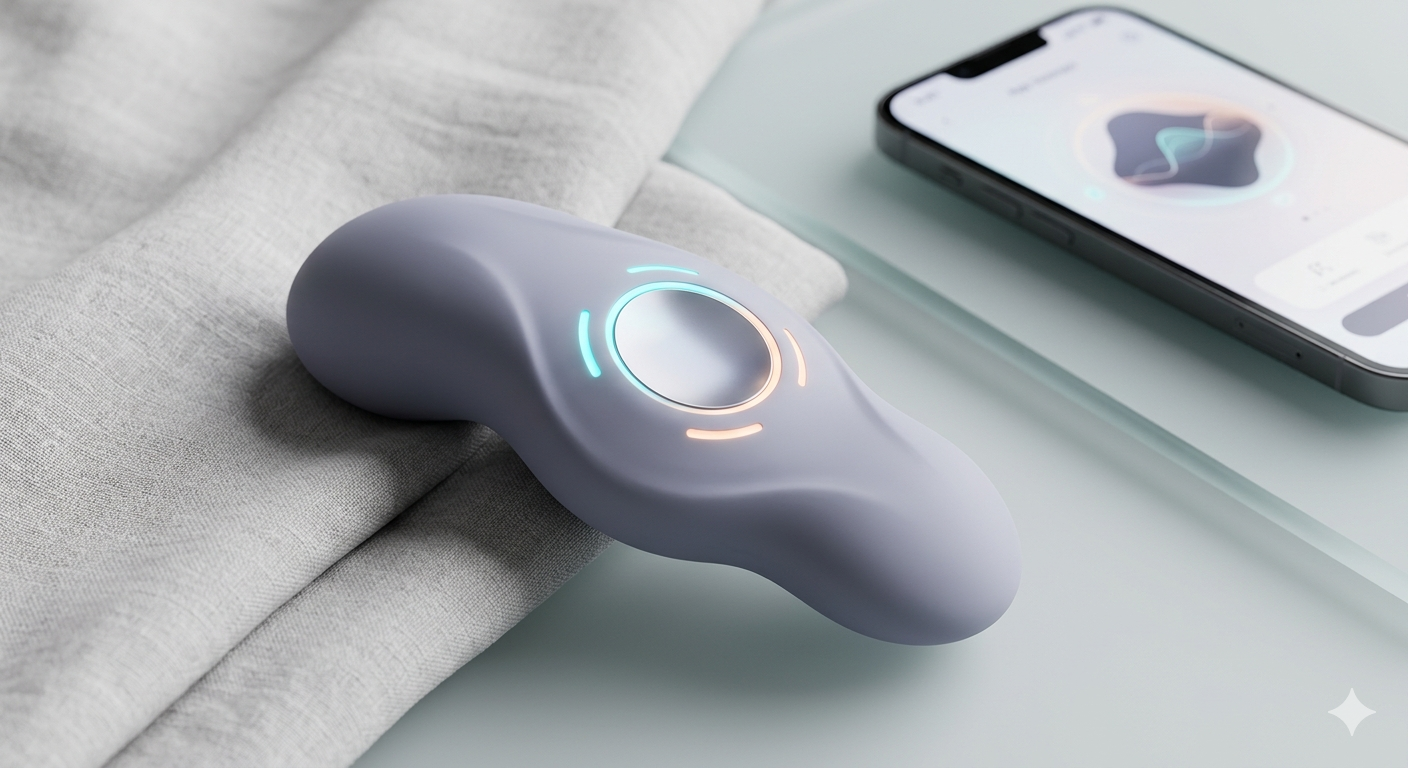
A toy that remembers what you liked last time is no longer a sci-fi gimmick. The real conversation around the ai powered sex toys future is much more interesting: what happens when intimate products stop being static devices and start responding like adaptive companions, coaches, and connected tools for pleasure?
That shift matters because luxury intimacy has already moved beyond simple function. Buyers want design, discretion, and a curated experience that feels personal. AI enters that space with a promise that sounds almost tailor-made for modern intimacy - better responsiveness, more nuanced customization, and a product that can learn rather than repeat.
What the AI powered sex toys future actually looks like
The phrase can sound bigger than reality, so it helps to separate fantasy from what is already taking shape. Most near-term AI in pleasure products will not look like humanoid robotics or emotionally sentient devices. It will look more like better software layered onto beautifully designed hardware.
That means pattern learning, adaptive intensity, voice responsiveness, biometric feedback, and more intelligent app ecosystems. Instead of choosing from ten vibration modes and hoping one lands, users may get devices that recognize pacing, duration, pressure preferences, and escalation patterns over time. For couples, that could mean remote experiences that become more responsive to real behavior rather than preset commands.
In other words, the future is less about spectacle and more about precision. The best products will feel less mechanical and more intuitive.
Why personalization is the real breakthrough
Pleasure has always been highly individual, which is exactly why AI has such obvious potential here. One person's ideal buildup is another person's instant turnoff. A fixed menu of settings can only go so far, especially for users who want a more refined experience.
AI could change that by learning from repeated use. A device may notice that a user consistently lowers intensity after an abrupt ramp-up, or that a certain rhythm works best after a longer warmup period. Over time, the experience becomes more tailored without requiring constant manual adjustment.
That matters even more in categories where nuance defines the difference between good and excellent. Clitoral stimulators, rabbit vibrators, thrusting toys, app-enabled couples devices, and remote-control styles all rely on timing and sensation more than raw power. In a premium market, responsiveness is luxury.
There is a trade-off, though. Personalization only feels elegant if it remains easy to control. If AI starts making too many assumptions, it can quickly feel intrusive or simply annoying. The best design will keep the user firmly in charge while making smart suggestions in the background.
AI and couples play could become much more connected
For couples, the most compelling part of the ai powered sex toys future may not be solo use at all. It may be how AI helps two people communicate desire more clearly, especially across distance or mismatched pacing.
Imagine a remote wearable that adjusts based on a partner's input patterns, previous sessions, or even shared preferences built over time. Instead of one person manually guessing what level feels right, the system could help shape a more synchronized experience. For long-distance couples, that creates a sense of responsiveness that feels closer to in-person intimacy.
There is also room for AI to act as a kind of intimacy layer between partners. Not as a replacement for connection, but as a facilitator. It could suggest modes based on mood, create custom scenes, or make remote interactions feel more fluid and less technical. That is especially appealing for users who want exploration without friction.
Still, couples will need to decide how much automation they actually want. Some will love a more guided, adaptive experience. Others will prefer direct control because the act of choosing is part of the intimacy itself. It depends on whether the technology enhances the dynamic or distracts from it.
The next frontier is feedback, not just control
App control was a major step, but it is only a step. The next wave is likely to center on feedback loops. That means products that do not just obey commands but respond to inputs in real time.
Those inputs could include motion, grip, muscle contractions, duration, temperature, and potentially wearable biometric data. In practice, that opens the door to experiences that shift with the body rather than forcing the body to adapt to the toy.
This is where AI could genuinely elevate premium intimacy. A design-forward device paired with smart feedback can create an experience that feels tailored in the moment, not just customized in a settings menu. For users who value intentionality, that difference is substantial.
It could also support discovery. Someone new to a category might benefit from a device that gently learns their preferences rather than requiring them to know exactly what they want from the start. That makes exploration feel more confident and less trial-and-error.
Privacy will define trust in the AI powered sex toys future
Any honest discussion of the AI powered sex toys future has to include privacy. The more a device learns, the more sensitive its data becomes. Intimate behavior is not just personal - it is among the most personal data there is.
That creates a clear challenge for brands and manufacturers. Shoppers will increasingly ask where data is stored, whether sessions are recorded, how preferences are processed, and what protections exist if an app is connected to the cloud. Beautiful hardware will not be enough if the trust layer feels weak.
For premium buyers, discretion is not a bonus. It is part of the product. That means the winning AI-enabled devices will likely be the ones that make privacy visible through thoughtful design: clear permissions, local data processing where possible, transparent settings, and control that never feels buried.
This is also where curation matters. A crowded market will inevitably include products chasing AI as a buzzword. Sophisticated shoppers will be better served by retailers and editorial voices that separate meaningful innovation from empty claims. At XtasyXperience, that kind of intentional discovery is exactly what helps turn curiosity into confident selection.
Will AI make intimacy feel less human?
It is a fair question, and not a prudish one. Some people worry that more intelligent devices could make pleasure feel clinical, overly optimized, or emotionally detached. Others are concerned about dependency - not on pleasure itself, but on highly personalized stimulation that becomes difficult to replicate with a partner.
Those concerns are real, but they are not automatic outcomes. Technology changes experience based on how it is designed and how it is used. A poorly considered AI toy could absolutely flatten intimacy into a series of efficient responses. A well-designed one could do the opposite, helping users understand their bodies better and communicate more clearly.
That distinction matters. The strongest products will not position AI as a substitute for chemistry, vulnerability, or imagination. They will use it to support them. Think less artificial intimacy, more intelligent assistance.
What shoppers should watch for next
The most exciting developments will probably arrive quietly. Better recommendation engines inside companion apps. Smarter remote-control dynamics. Devices that adapt with more subtlety. Product ecosystems that connect solo pleasure, partnered play, and education in a way that feels cohesive rather than gimmicky.
Materials and aesthetics will matter just as much as intelligence. In a luxury category, no one wants advanced features wrapped in cheap design. The future belongs to products that combine elegant form, body-safe construction, intuitive interfaces, and personalization that feels refined.
It is also likely that categories will split more clearly. Some users will want AI-enhanced toys that simply improve sensation. Others will be drawn to companion-style experiences, voice interaction, or erotic storytelling integrated into devices. Neither direction is inherently better. They serve different intentions.
For most shoppers, the smart move is not to ask whether AI belongs in intimacy. It already does. The better question is what kind of intelligence actually improves the experience you want.
That is where this category gets interesting. The future will not be won by the loudest technology. It will be shaped by products that feel more responsive, more discreet, and more attuned to real desire. If AI can make intimacy feel more personal rather than more mechanical, then it has a place - not as a novelty, but as part of a more thoughtful, elevated standard of pleasure.